We're a foundation repair crew working the Rockwall area, and most weeks we're underneath houses built anywhere from the 1970s to last year, looking at the same story with different details. Rockwall sits on soil that doesn't hold still, and a house built on that soil doesn't hold still either — the trick is figuring out how much movement is normal and how much needs a pier. That's what we do, room by room, before we ever talk about a fix.
Why Your Foundation Is Moving in the First Place
Most of what we see traces back to the ground, not the concrete. Rockwall-area homes sit on expansive clay soils — Houston Black and Branyon clays run through this county and into Collin and Dallas — and those clays can swell more than 10% in volume when they're saturated, then shrink back down just as much when they dry out. That's not a small margin. A foundation sitting on soil that's expanding and contracting by double digits is going to move, and it's going to move unevenly, because the soil under one side of your slab is rarely drying or wetting at the same rate as the soil under the other.
What makes it worse here is the pattern, not just the soil type. A hot Texas summer pulls moisture out of the clay and it pulls back from the foundation; then winter and spring rains soak it again and it swells back. That drought-and-deluge cycle repeats every year, and every cycle is another small push on a foundation that was poured level once. It's why the same house can throw a new crack in August and a stuck door in March — different seasons, same underlying cause.
Add in mixed soils across different lots and builders working to different standards over the decades, and you get a lot of variation house to house, even on the same street. That's part of why we don't quote off a phone description.
What We Actually Handle
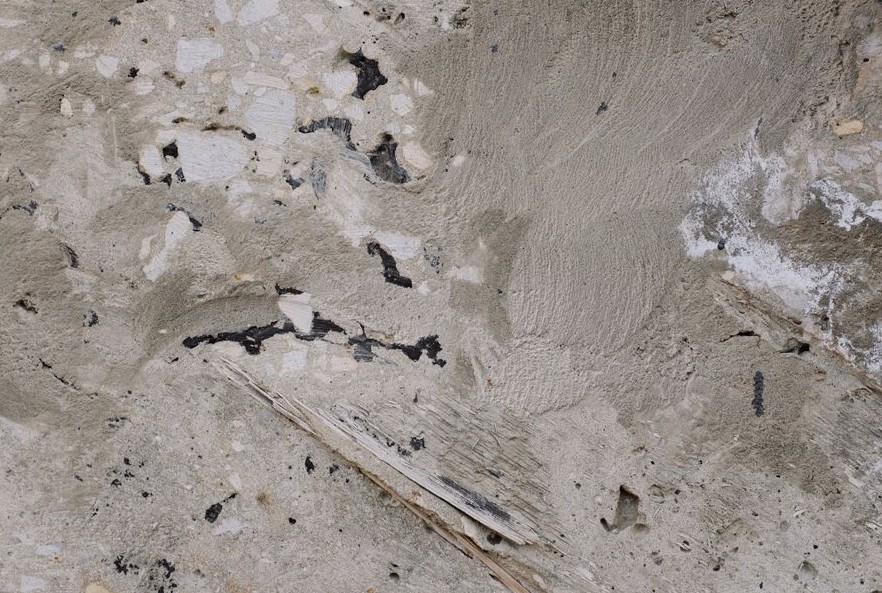
Foundation repair is the core of the work — piering, lift, and stabilization for houses where the slab or footing has settled unevenly. But a lot of what shows up as a foundation call turns into a mix of related concrete work once we're on site, and we handle that too: concrete leveling where a slab has dipped or tilted without needing full piering, concrete repair for spalling, crumbling edges, or cracked slabs, and driveway repair where a concrete driveway has settled, heaved, or cracked along with (or separately from) the house.
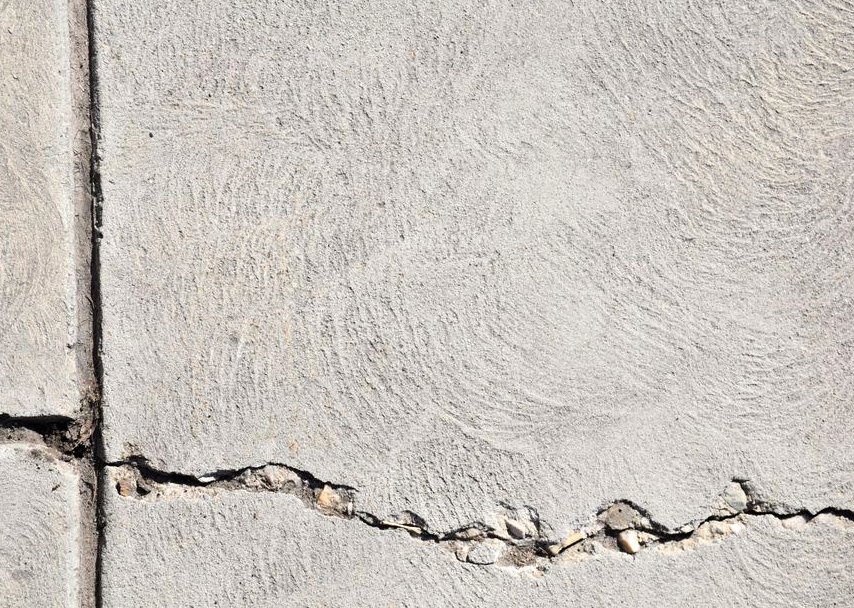
Concrete crack repair often comes up as its own smaller job — a crack in a patio slab or a garage floor that isn't tied to structural settling at all, just ordinary concrete aging or a control joint that never got cut. And plenty of what people call "foundation cracks" turn out to be cosmetic slab or stem-wall cracking rather than true foundation movement, which is exactly why we look before we assume.
We treat these as related but separate problems. A driveway that's heaved from soil movement doesn't necessarily mean your house foundation needs piers, and a foundation that needs piers doesn't automatically mean your driveway does too. We diagnose each on its own.
How We Diagnose Before We Quote
Every foundation job starts with a manometer survey — a room-by-room elevation reading that maps exactly how much each part of your slab has settled relative to the rest of the house. It's the difference between someone telling you "the floor feels off" and having an actual drawing that shows the kitchen corner is down three-quarters of an inch while the bedroom hasn't moved at all. That map is what tells us whether you're looking at full piering, a partial lift, or nothing structural at all.
Where piers are on the table, we also run a soil bearing-capacity test. Piers only work if they're set to the depth where the soil underneath can actually carry the load — guessing at depth is how you end up with piers that settle again in a few years. The test tells us how deep to go on your lot specifically, not off a generalized number for the county.
We hand you the survey results and walk through what they mean before we talk about a fix. If the numbers come back within normal range for the age and construction of the house, we say so.
What Foundation Repair Actually Costs You
There's no flat number we can put on a page and have it mean anything, because cost follows the survey, not the other way around. A house that needs six piers on one corner costs differently than one that needs a full perimeter of piers, and a slab that just needs leveling costs differently than either. Depth matters too — the soil bearing-capacity test can put piers deeper on one lot than another a quarter mile away, and depth affects labor and materials.
What we can tell you is that the diagnosis comes first and the price follows it, in writing, tied to what the elevation survey actually shows. We don't quote a foundation repair off a phone call or a photo, because two houses with the same symptoms can need very different amounts of work underneath. With median home values in the area running well above $380,000, it's worth getting the real number rather than a guess.
What to Do First
Start by noticing, not by patching. Stuck doors, new cracks over doorframes, a driveway edge that's lifted, a slab crack that keeps coming back after you've filled it — write down when you first saw it and take a dated photo. Six months of comparison photos tell us more than one visit ever could, and they tell you something too: whether it's getting worse or just sitting there being an old-house quirk.
Don't caulk over a crack and call it handled if it's part of a bigger pattern — stair-step cracking, sloping floors, gaps at the ceiling — because sealing the surface doesn't touch the soil movement underneath it. And don't assume a settled driveway slab means your foundation is next; they can move independently.
When you're ready, we come out, run the manometer survey, and — if piers are in the picture — the soil bearing test, and you get a drawing and a number before any work starts.
What Makes Rockwall Different
From the field — what Rockwall throws at a project like this:
Climate
- humidity load that stresses building envelopes
- freeze/thaw cycling in colder months
- variable annual precipitation
- Freeze risk: medium — relevant to freeze/thaw foundation stress.
Soil & Ground
- mixed regional soils with some shrink-swell potential
- seasonal moisture variation affecting foundations
Local Notes
- Serving Rockwall, TX and surrounding communities.
- Housing stock: median year built 2003. Source: U.S. Census ACS.
- Housing tenure: 75% owner-occupied, 25% renter-occupied. Source: U.S. Census ACS.
- Median household income $114,926. Source: U.S. Census ACS.
How We Do Business
- Free Estimates
- You pay for work, never for the quote.
- The quote is the price
- The quote is the invoice. Surprises are for birthdays.
- Measured, not guessed
- Numbers come from the site visit, not from a script.
- We walk you through the finished work
- The job ends with a walkthrough, not a wave goodbye.
See the Work
A visual look at what the service involves.
How We Help Rockwall Homeowners
Getting Started Is Simple
-
Reach Out
Tell us what you're seeing and when it started — you'll get a straight answer, not a sales pitch.
-
We Take a Look
We come out, measure what's actually happening, and walk you through what we find.
-
Clear, Written Quote
You get the scope and the price in writing before any work starts. No surprises.
-
We Do the Work
We complete the repair, verify it solved the problem, and stand behind the work.
Some of what that looks like in the field:
- Final crack sealing once the structure is stabilized
- Manometer survey to map differential settling across every room before any lift
What It Typically Costs
Ranges to budget around - every situation is priced on its own specifics.
$400–$1500
$3–$6
Common Questions
What causes foundation settling in Rockwall?
In Rockwall, settling comes down to the local ground conditions: Mixed regional soils with some shrink-swell potential. Seasonal moisture variation affecting foundations.
Why have my doors and windows started sticking?
When a foundation settles unevenly, the frame of the house racks slightly out of square, which binds doors and windows. It is one of the earliest noticeable symptoms of movement.
Can foundation problems wait, or are they urgent?
Foundation movement rarely stops on its own and usually worsens with each wet-dry cycle, so delaying tends to raise the eventual cost. An early inspection keeps options open and repairs at the lower end of the range.
Will fixing my foundation stop water in the basement?
Structural repair and water control are related but separate. Sealing cracks helps, but persistent basement water usually also needs drainage measures such as interior drain tile and a sump system.
What happens during a foundation repair estimate?
A proper estimate includes a walk-through of the symptoms, a manometer or elevation survey, and a review of soil and drainage conditions, followed by a written scope with pier count, method, and price. Be cautious of any quote given without measuring the differential.
What are the warning signs that my foundation needs repair?
The most common signs are cracks wider than a quarter inch, doors and windows that stick or won't latch, sloping or uneven floors, and gaps opening where walls meet the ceiling. Any one warrants an inspection; several together usually means active movement.
A Few More Questions
How do I know if a crack is structural or cosmetic?
Hairline cracks in drywall are usually cosmetic. Diagonal cracks from window and door corners, horizontal cracks in a foundation wall, and stair-step cracks in brick or block are structural warning signs that should be evaluated.
What causes a foundation to settle?
Settlement is almost always about the soil under the footing. Expansive clay that swells and shrinks with moisture, poor drainage that washes out support, plumbing leaks, and loosely compacted fill on newer builds are the usual causes.
Do push piers or helical piers last longer?
Both are engineered for the life of the structure. The choice is driven by soil and load: push piers suit heavier homes that can drive the pier to a deep load-bearing stratum, while helical piers suit lighter structures or shallow-bearing soils.
What is the difference between push piers and helical piers?
Push piers are hydraulically driven straight down using the weight of the house until they reach firm strata. Helical piers are screwed into the ground like a large anchor and reach capacity by torque, so they don't rely on the home's weight to install.
How deep do foundation piers go?
There is no fixed depth. Piers are advanced until they reach soil or rock that can carry the load, which can be a few feet or more than thirty depending on the site. A soil bearing test sets the target before installation.
Our Service Area
Crews serve Rockwall, TX. Call (469) 887-9520 to confirm coverage for your address.
Fast Scheduling
Talk to a local pro now: (469) 887-9520.
Free estimates · No-pressure scheduling